Home · About me
Olga Antonova
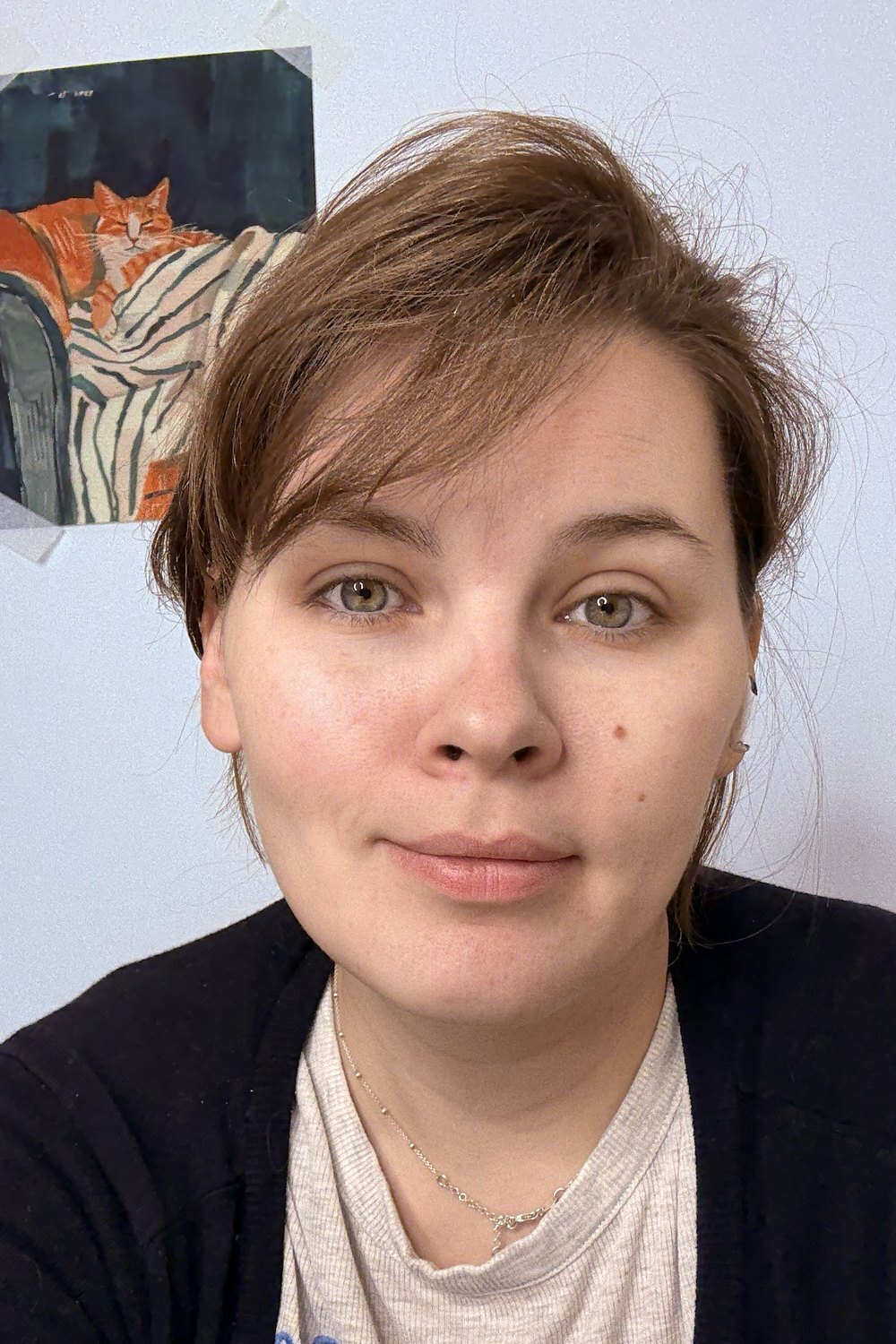
I am Olga, a clinical psychologist, and I am fascinated by the human brain. I also love my work, because it lets me be alongside people and contribute to important changes in their lives.
Path
- 2014Mechanics and Mathematics, Moscow State University
A mathematician by first profession. Several years in exact sciences and IT. That is where the structure comes from, and the habit of solving problems that do not yield at the first attempt.
- Before the professionFirst as a client
100+ hours of personal therapy, 80 hours of group therapy, 50+ hours of supervision before choosing psychotherapy as my work. I needed to be sure personally that it works.
- 2021Start of practice
I started as a psychodynamic psychologist: training at the Institute of Psychotherapy and Clinical Psychology. That is where the understanding of deep processes and of how relationships work comes from.
- 2023Clinical psychology
A clinical psychologist’s diploma. Then contextual and behavioural methods: ACT, CFT, IPSRT, schema therapy, MBCT. Co-founder of the group therapists’ club “Dynamics”.
- EmigrationRussia → Armenia → Mauritius → London
Three countries in a row, with family and an online practice. What it means to live “still in progress” I know not only from stories.
- 2026London
MSc in CBT, training in clinical supervision, a course on personality disorders, membership of ACBS. Working online in Russian and English.
- ThroughoutContact skills
Nonviolent communication and motivational interviewing: what relationships rest on in therapy, in a couple and in a group.
What I can talk about for a very long time, besides work
Education
You have every right to ask any psychologist for their diploma. Mine are here; scans will follow.
Core
Training in methods
Supervision training
Talks
Hours: Russian certificates as issued (academic hours of 45 minutes); foreign CE hours of 60 minutes converted to academic hours and rounded.
Methods I work in
All methods with proven effectiveness: research and clinical guidelines stand behind each, and I rely on them rather than on intuition. Elements of the existential-humanistic approach add a human dimension.
The method is chosen for the request and for you, not the other way round, and we choose it together: I explain how the theoretical model we will work in is built and why it includes this or that exercise. You have the right to influence that choice.
Working principles
I work with methods that have a scientific basis and effectiveness research: ACT, CFT, CBT, schema therapy, IPSRT, MBCT. I explain why I suggest exactly this and can show the sources.
You know what we are doing and why before we start. Consent is not paperwork but a conversation we can return to at any moment.
A place where you are understood and cared for, and at the same time there is a clear frame: goal, time, terms. One does not work without the other.
Not for the sake of strictness but for safety and results. Everything else is negotiable.
I am in personal therapy and receive regular supervision: that is professional hygiene. Relationships matter to me; I have been in my own supervision group for more than 5 years. A code of ethics and the ACBS association, which you can turn to if something goes wrong.
Attention to power, inequality and context. Three emigrations taught me not to treat my own norm as the only one.
What matters to say at the start
- Asking for help is a skill
If you are reading this page, most likely things have been hard for a while and you have tried a lot on your own. That is not weakness or laziness. We are built so that carrying heavy things alone is hard.
- Therapy is not all-powerful
Our state is shaped by the way our mind works, by relationships and by what is happening around us. Sometimes it is not that something is wrong with you; the conditions are like that. Our task is not to fix you but to work out what can be changed and what to learn to live with without losing yourself.
- You have a voice
You have the right to:
- ask “why?” about any technique, intervention, model or task;
- regulate the pace. We have a pause rule: both of us can say “stop” to sort things out;
- say “no” and decline what does not suit you;
- ask for documents about my training, research and any justification of what we use in the work.
- How many sessions it takes
Very individual. A consultation on a specific question: 2–10 sessions. Work with complex trauma: from 40. The mind keeps working between sessions, sometimes more than in them. We agree the goal and the approximate number of sessions at the end of the 1st session.
- What I do not have and what I do
No quick miracles, no diagnoses by message, no friendship with clients and no collecting of testimonials. What I have is the experience of being a group member and professional hygiene: personal therapy and regular supervision. Relationships matter to me; I have been in my own supervision group for more than 5 years.
Values
People of any gender, sex, social status or religion. If our core values diverge in a way that could affect the work, I will suggest another specialist.
- LGBTQ+ affirming
- feminism
- anti-war position
- nonviolent communication
There is a feminist lens in my work: I pay attention to power, inequality, discrimination and how care and responsibility are distributed. With me you can talk about sexuality, gender identity and relationships without having to justify them.
2 reduced-fee places: £70 £35, −50%, for people from vulnerable groups. More
- to find out where a psychologist trained and ask for the diploma;
- to ask for supervision documents;
- to decline any requirement you did not consent to;
- to know why a technique is used.
